
Skip to content
Call (208) 505-4111

RV Pads & Concrete Driveway Extensions Nampa ID

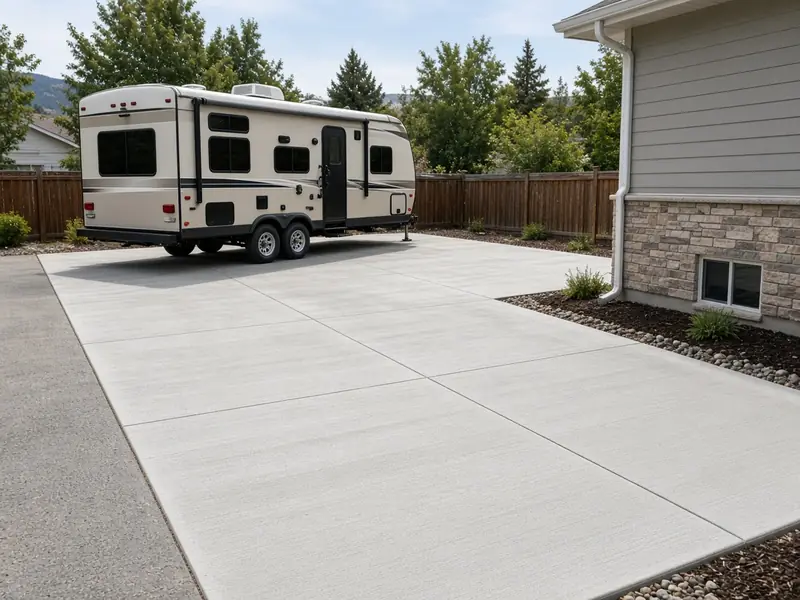
A concrete RV pad or driveway extension in Nampa turns the gravel strip beside the garage into a solid, level place for the trailer, boat, camper or third car. We pour pads thick enough for what will actually sit on them and match the new concrete to the driveway you already have.

New concrete RV pad beside a driveway with a travel trailer parked on it

Request a site visit and itemized quote

Rather talk it through?

(208) 505-4111

Call or send the form. Either way, you get a site visit and an itemized quote.

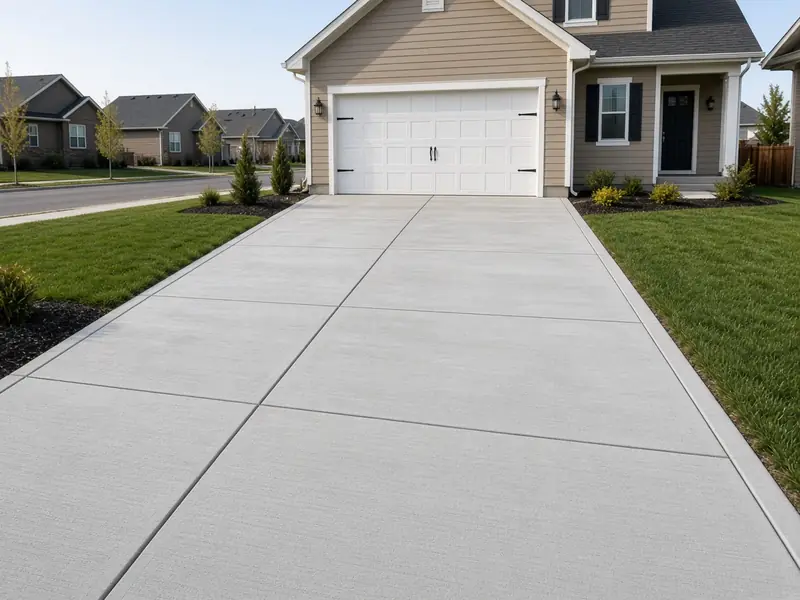
New broom-finish concrete driveway with straight saw-cut control joints leading to a two-car garage

What Nampa's Code Says About RV Parking

Nampa's off-street parking chapter (City Code 10-22) answers most of the questions people ask before they build a pad:

  1. Recreational vehicles, trailers, boats and other vehicles not in daily use may be parked off the driveway in the front yard setback on a "dustless" surface such as gravel, concrete or asphalt (10-22-1.C).
  2. RVs, trailers and other large objects taller than 3 feet have to be parked behind the 15-foot front yard setback that applies to the home's livable space (10-22-1.C). Passenger cars and pickups aren't held to that setback.
  3. Parking on the grass in a residential zone, off a driveway or parking pad, is unlawful (10-22-5.F.4).
  4. A secondary or auxiliary residential driveway may be gravel or pavers instead of concrete (10-22-5.F.1.a), so concrete is a choice there, not a requirement.

Those rules shape where the pad can go. On a lot where the RV has to sit behind the 15-foot line, a side-yard pad running back toward the rear of the house is often the only spot that works.

How Thick an RV Pad Should Be

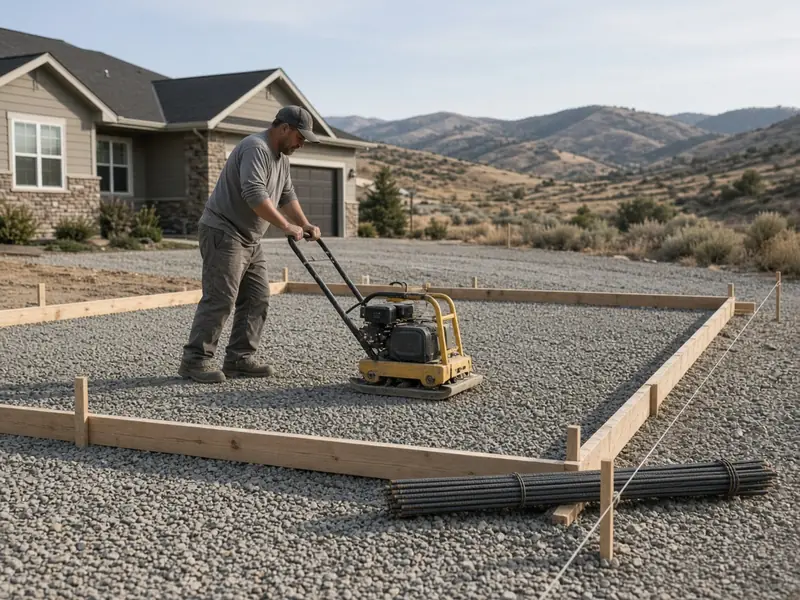
HomeGuide's driveway guide recommends 5 to 6 inches of concrete for RVs and heavy vehicles, compared with 4 inches for everyday cars, plus thickened edges of 6 to 8 inches where tires roll on and off. A motorhome or a loaded fifth-wheel sits in one place for months, so the base under it matters as much as the concrete. We dig out soft topsoil, compact a gravel base and reinforce the slab before it's poured.
Matching an Extension to Your Driveway

A driveway extension should look planned, not patched on. We set the new slab's height to the existing concrete, carry the joint lines through, and pin the new pour to the old edge where it makes sense, so the two slabs move together instead of shearing apart at the seam. If the extension widens the curb cut at the street, that part is public right-of-way work and needs a City of Nampa permit; see driveway approach work.

Worker compacting a gravel base inside new wooden forms for a driveway, with foothills behind

Long Driveways and Shop Access

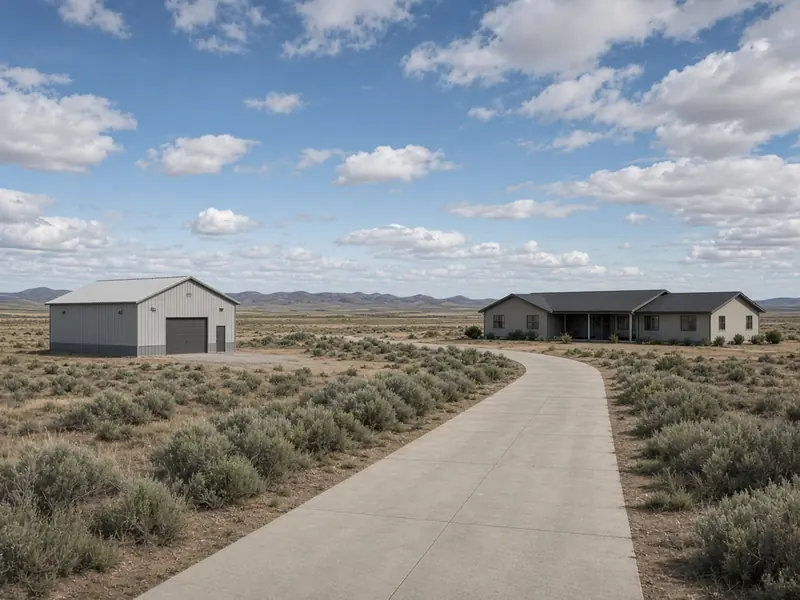
Nampa's code requires private driveways for detached homes to be at least 12 feet wide, and 20 feet wide once they're longer than 150 feet. Driveways longer than 150 feet also need a fire-truck turnaround near the end (10-22-3.A). Those numbers come up on acreage lots where a drive runs back to a shop or RV barn.

What It Costs

HomeGuide's 2026 national guide lists a concrete RV pad of 200 to 700 square feet at $1,200 to $8,400 installed. Removal of old gravel or concrete, base depth, thickness and access for the truck move the number most. Your quote breaks each of those out.

Long new concrete driveway across sagebrush acreage to a ranch house and a metal shop

Request an RV Pad Quote

Tell us what you're parking, the rough size of the space and where it is on the lot. Call anytime at (208) 505-4111 or send the Nampa Quote Request form, and we'll set up a site visit and an itemized written quote.

New concrete RV pad beside a driveway with a travel trailer parked on it

Call (208) 505-4111Email: info@nampaconcreteworks.com

Back to Nampa Concrete Works for driveways, patios and every other concrete service in Nampa.

Call (208) 505-4111Request a Quote