Concrete Leveling Nampa ID - Mudjacking & Polyjacking Slab Lifting
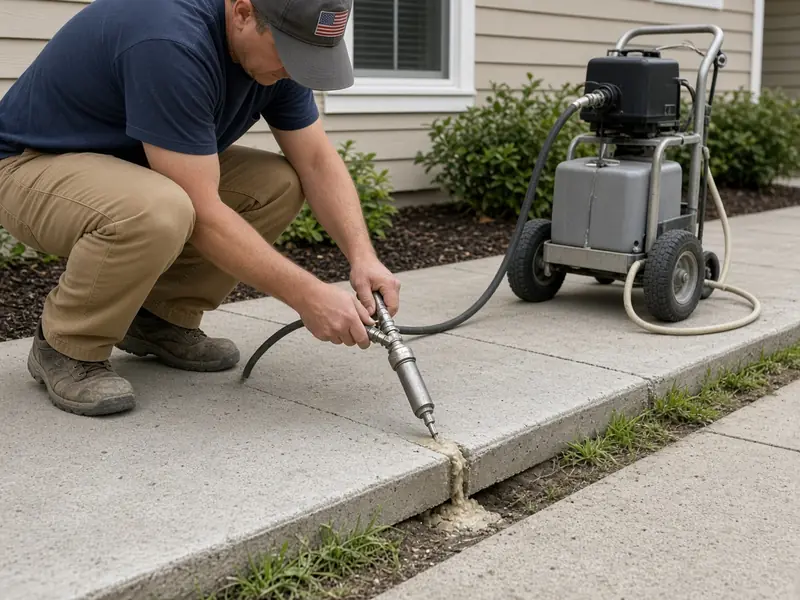
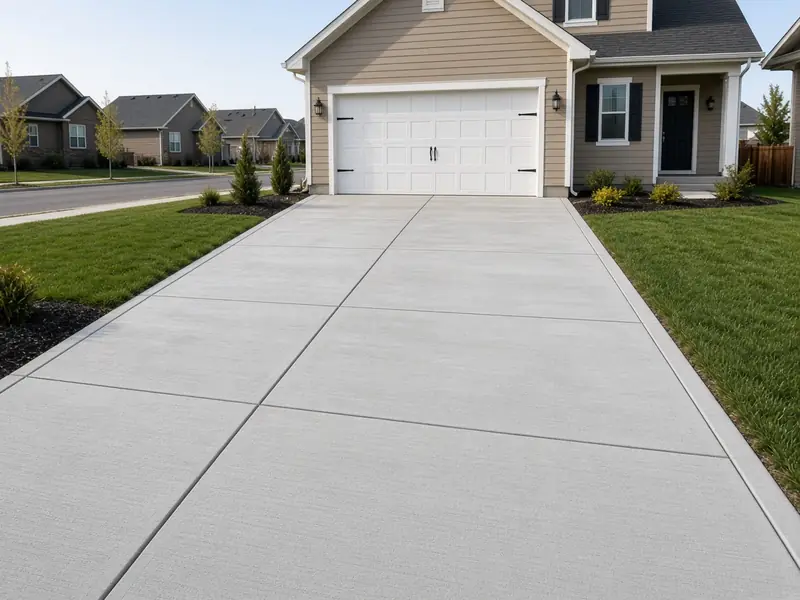
A sunken sidewalk panel, a driveway slab that has dropped at the garage door, or a patio tipping toward the house can often be lifted back into place instead of torn out. Concrete leveling, also called slabjacking, raises settled slabs by filling the voids underneath them.
Call or send the form. Either way, you get a site visit and an itemized quote.
Mudjacking
Mudjacking pumps a cement-based slurry, typically water, soil, sand and cement, under the slab through small drilled holes. As the material fills the empty space, it lifts the concrete gradually until it's back at the right height. The holes are patched and, according to HomeGuide, the surface is ready to use within 24 hours. HomeGuide's 2026 national range for mudjacking is $4 to $9 per square foot.
Polyjacking
Polyjacking, or foam jacking, uses expanding polyurethane foam instead of slurry. The holes are smaller, the material is much lighter, and it cures quickly. HomeGuide lists polyjacking at $8 to $25 per square foot and notes that premium materials can double or triple the per-square-foot price. Job minimums of $300 to $700 are common for either method.
When Leveling Works, and When It Doesn't
Leveling only works on concrete that's still in one piece. A slab that's broken into several chunks, heaved up by roots, or scaled across most of its surface won't come back by lifting it. We check the slab at the site visit and tell you plainly if replacement is the better value.
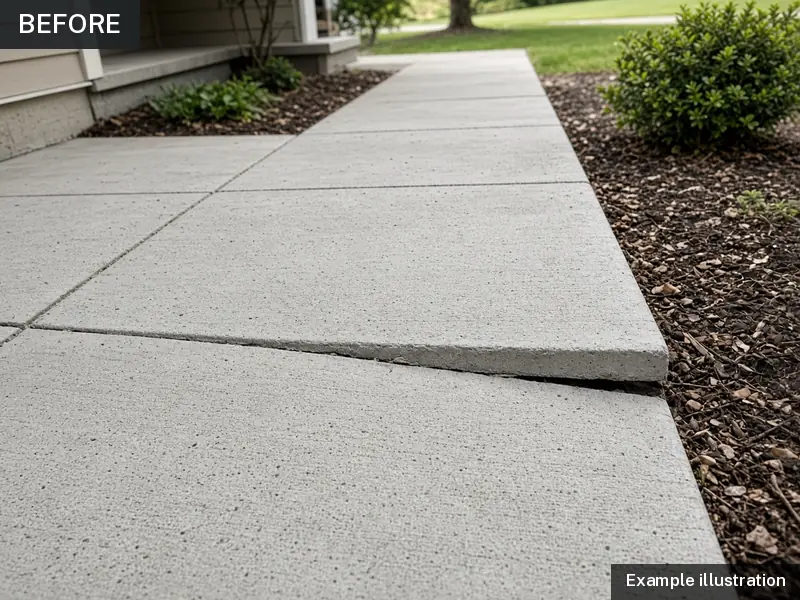
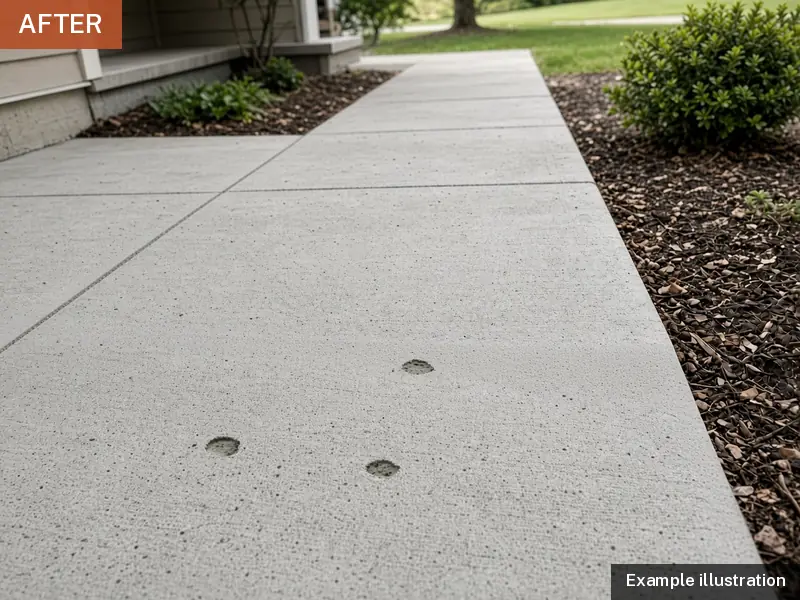
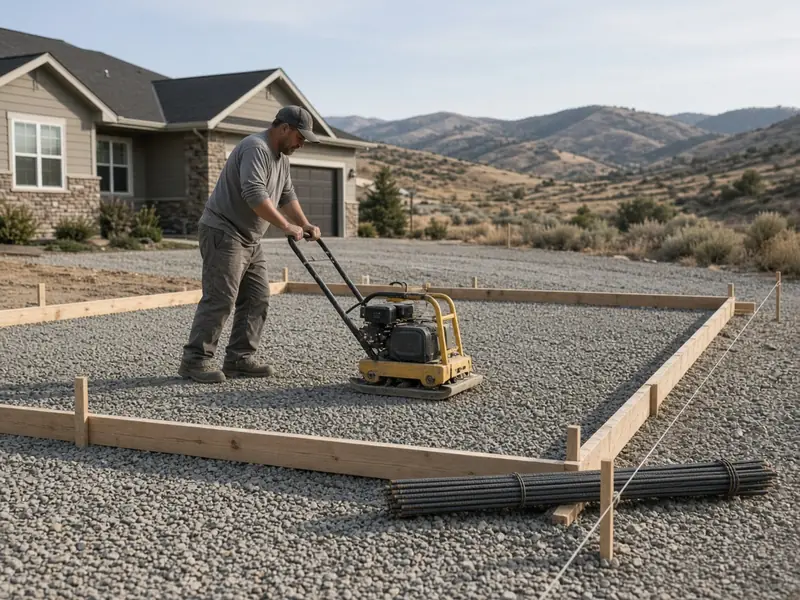
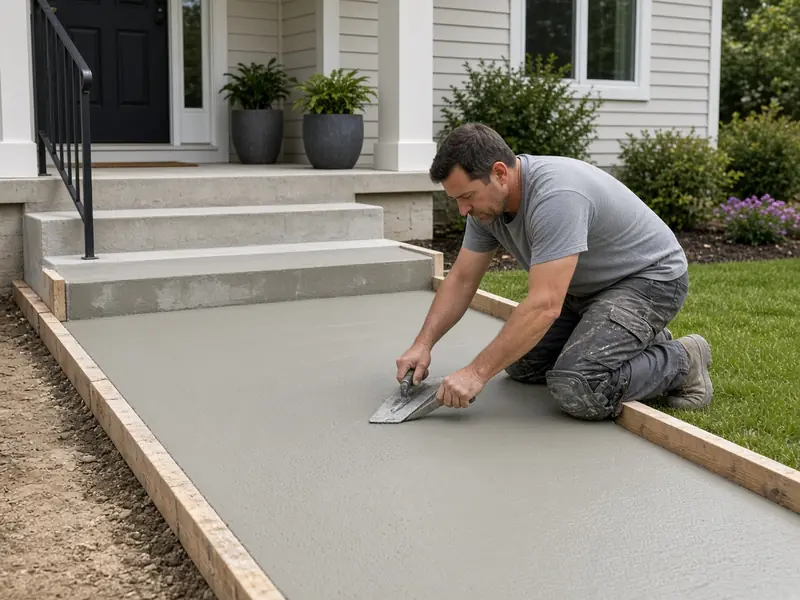
Example illustration, not a photo of a completed project.
Walkway panel leveling
Why Slabs Sink in the Treasure Valley
Most settling starts with water. Downspouts that dump next to a walk, sprinklers soaking the edge of a patio, and irrigation that runs all summer wash fine soil out from under slabs. Many soils in the Treasure Valley also drain slowly. The USDA describes the Sebree soil series, common on terraces in southwest Idaho, as having slow permeability above a cemented hardpan layer. HomeGuide puts the life of a mudjacking repair at 5 to 10 years or longer, and says that depends more on fixing the cause of settlement than on the lift itself.
Fix the Water First
Extend downspouts away from walks and driveways.
Aim sprinkler heads so they don't soak slab edges.
Seal open joints and cracks so surface water stays on top. See crack repair.
Regrade soil that slopes toward the slab.
Trip Hazards
A panel that has dropped an inch or more at a joint is a trip hazard for anyone walking up to your door. Leveling usually brings it back flush in a single visit, without the demolition, haul-off and cure time of a new pour.
Get started
Request a Concrete Leveling Quote
Send photos of the sunken area and roughly how far it has dropped. Call anytime at (208) 505-4111 or send the Nampa Quote Request form, and we'll set up a site visit and an itemized written quote.